Softears RSV-MKII
> Impressive low-end weight and texture for a BA design
> Wide, spacious staging with strong imaging and layering
> Premium build, cable, and accessory package
> Venting system eliminates pressure build
> Shell size leans larger… may be less ideal for smaller ears
> Polite/safe tuning means not aimed at detail chasers or treble enthusiasts
RRP: $699
6x BA
Introduction
Two caveats to kick right off with: the first is that I am without question a Softears fanboy – this began with Twilight, moved swiftly to the Turii Ti which fast became not only my favourite single DD, but took the prize as my top IEM for a couple of years and a set I still hold very much in high esteem. More recently I’ve loved Enigma, and while I’ve not listened for a while now and must dig them out, the excellent Volume S. I noted ‘two caveats’, so logical to note the second which sort of blends into the first – when Softears asked if I might be interested in reviewing the RSV MKII, that was met with an enthusiastic ‘yes please!’ Worth noting also that I have a huge soft spot for all BA sets too, notably the legendary Sony IER-M9 and the more recent FIIO FA19.
As always, all thoughts and photos are my own and with no input from the brand.
About Me
I worked in the consumer electronics industry for a large part of my career and have been passionate about music and technology for as long as I can remember. Even as a small child, I would ask my mum to put records on the turntable (Abba, Supertramp, and Planxty if anyone is curious).
My music preferences are very varied—anything from classical to techno, indie rock to jazz, and everything in between. In my early teens, I was a big fan of bands like The Cure and The Smiths (still am all these years later). I was bitten by the dance music bug in the early 90s, becoming passionate about genres like techno, house, trance, and IDM. I amassed a huge collection of records and CDs, DJing at various parties and occasional pirate radio station slots. Although it remained a hobby, I still own thousands of records, and my trusty Technics 1210 turntables are still going strong 30 years later—a testament to Japanese engineering!
I am not a professional reviewer, just an enthusiast who loves music and the devices we use to listen to it. Over the last few years, I have become obsessed with IEMs and related gear. I’ve bought and sold many, and kept a select few—ranging from the $20 Moondrop Chu to kilobuck sets like the Aroma Jewel, Oriolus’ infamous ‘Traillii,’ UM Mentor, and various beloved single DDs. Through this exploration, I like to share my thoughts with the Head-Fi community, hoping they might be useful to others. However, remember that this is a highly subjective hobby, and your mileage may vary.
While I’ve been fortunate to own and try a variety of the TOTL sets on the market, I honestly enjoy lower-priced sets as much – especially as the gap continues to close, many much cheaper sets now offering significant value and further driving diminishing returns.
I’ll admit I do suffer from happy ears… rarely do I find an IEM that I genuinely dislike. At this stage, there are very few truly “bad” IEMs; it almost always comes down to individual preference. Since I listen to such a wide variety of genres, I nearly always find synergy with some part of my library. Where my scores reflect deductions is in areas like value for money, poor accessories, or an uncomfortable fit – things that genuinely detract from the overall experience, rather than subjective tuning differences.
About Softears
A Chinese brand focused on technology, R&D, and innovation Is a young but experienced company. The founder started working in audio in 2014, the studio was founded in 2017 in Shenzhen, China’s Silicon Valley, and in 2019 set up an independent lab for R&D and our own factory in Chengdu, a Humanistic City. Softears wants to bring you a soft and comfortable, balanced and durable listening experience. We are committed to research and development of loudspeakers and tuning equipment, with excellent manufacturing process and excellent quality control, pride in excellence is our brand way. We pour all these efforts to make ourselves capable of producing a true hi-end product meticulously, we swear by it.
Specifications:
Sensitivity: 122 dB/Vrms @ 1 kHz
Impedance: 7 Ω @ 1 kHz (±15%)
THD: < 1% @ 1 kHz
Connector Type: 2-pin (0.78 mm)
Driver Configuration: 5 Balanced Armature Drivers
Effective Frequency Response: 20 Hz – 20 kHz (IEC60318-4)
Frequency Response Range: 15 Hz – 40 kHz (1/4-inch free-field microphone, -3 dB)
Shell: Medical-Grade Resin + CNC Aluminum Alloy + Forged Carbon Fiber
Stock Cable: 6N Oxygen-Free Copper, 4.4 mm Balanced Plug + 2-pin (0.78 mm) Connectors, 4.4 mm to 3.5 mm Adapter Cable
Unboxing
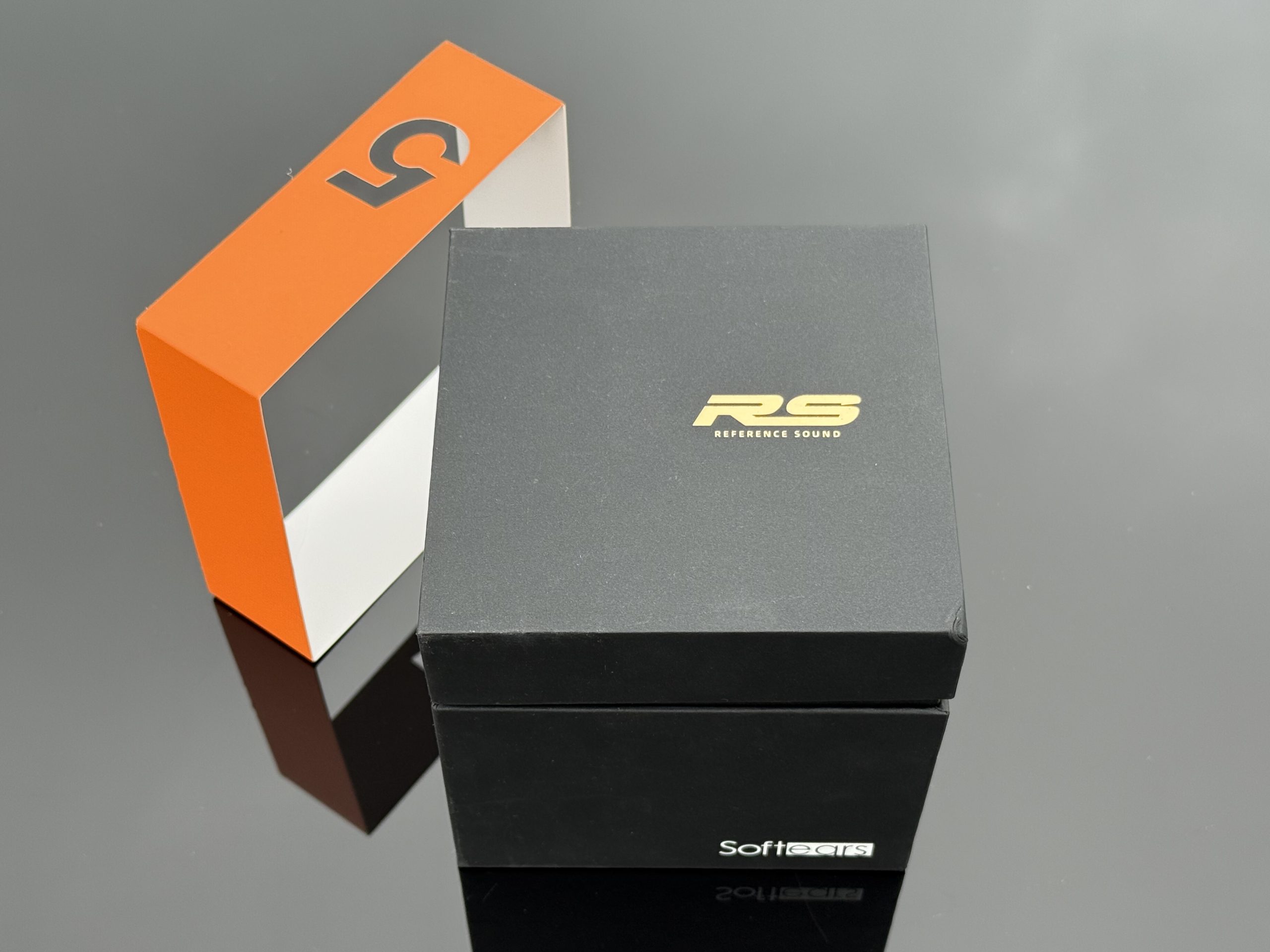
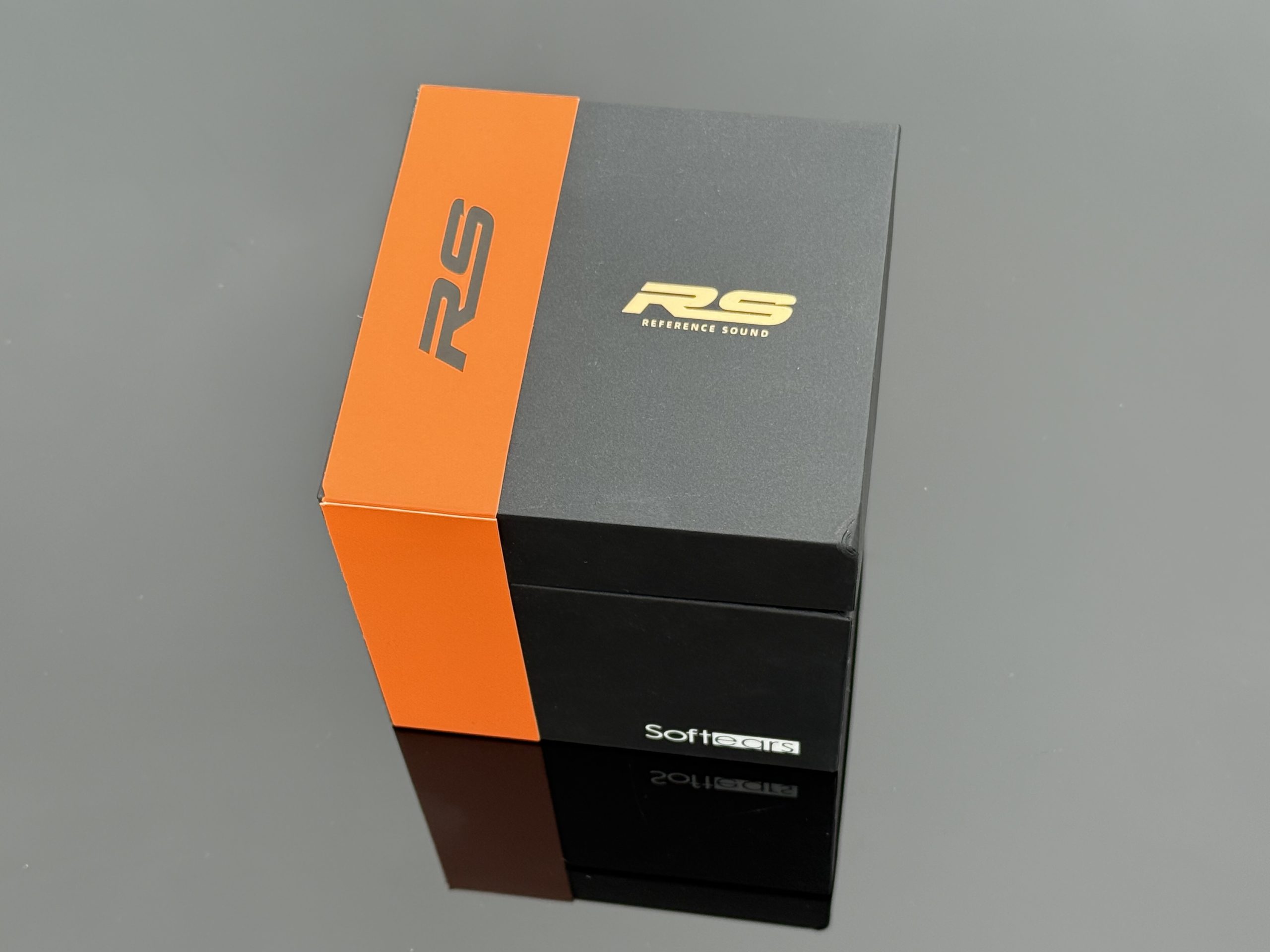
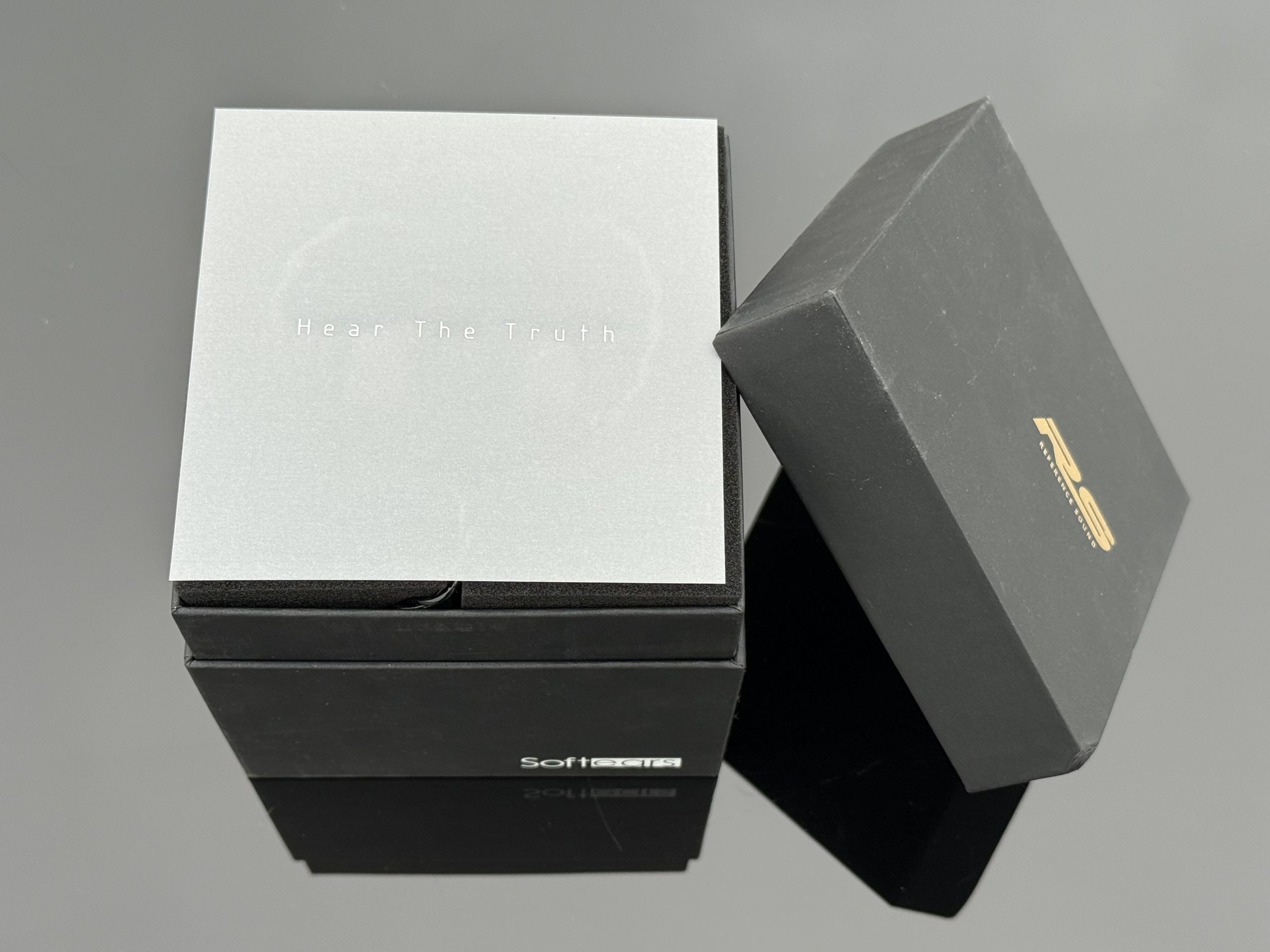
The Softears unboxing is always a pleasure – high quality packaging and with a level of branding that matches their premium price tag.
Accessories
Softears are always very generous with the included accessories and again the quality befits the price tag. In the box you get:
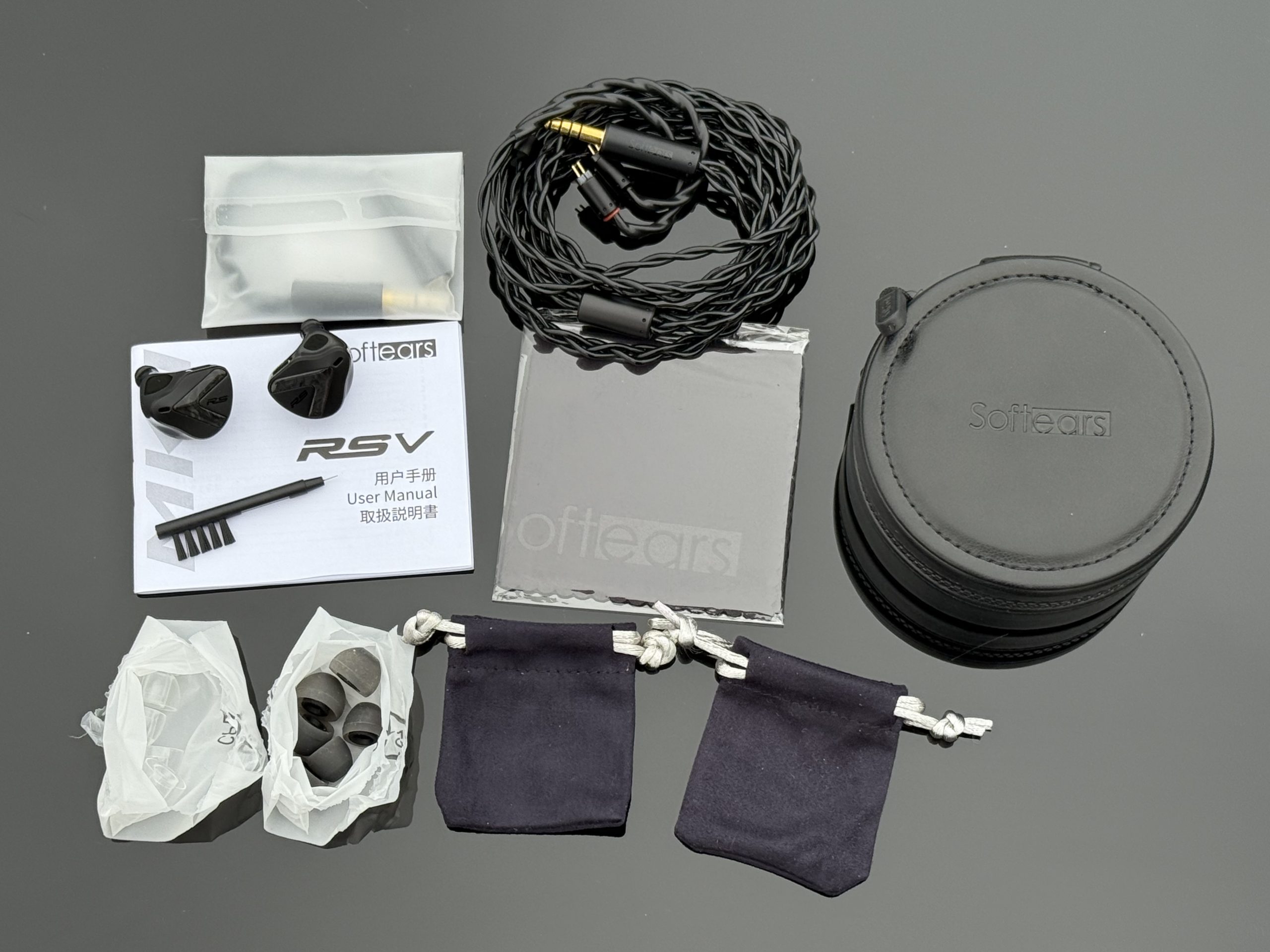
- 4.4mm to 3.5mm adaptor
- Cleaning cloth
- IEM protective pouches
- Cleaning brush
- UC tips in S/M/L
- Type-B tips in S/M/L
- Puck style carry case
Case
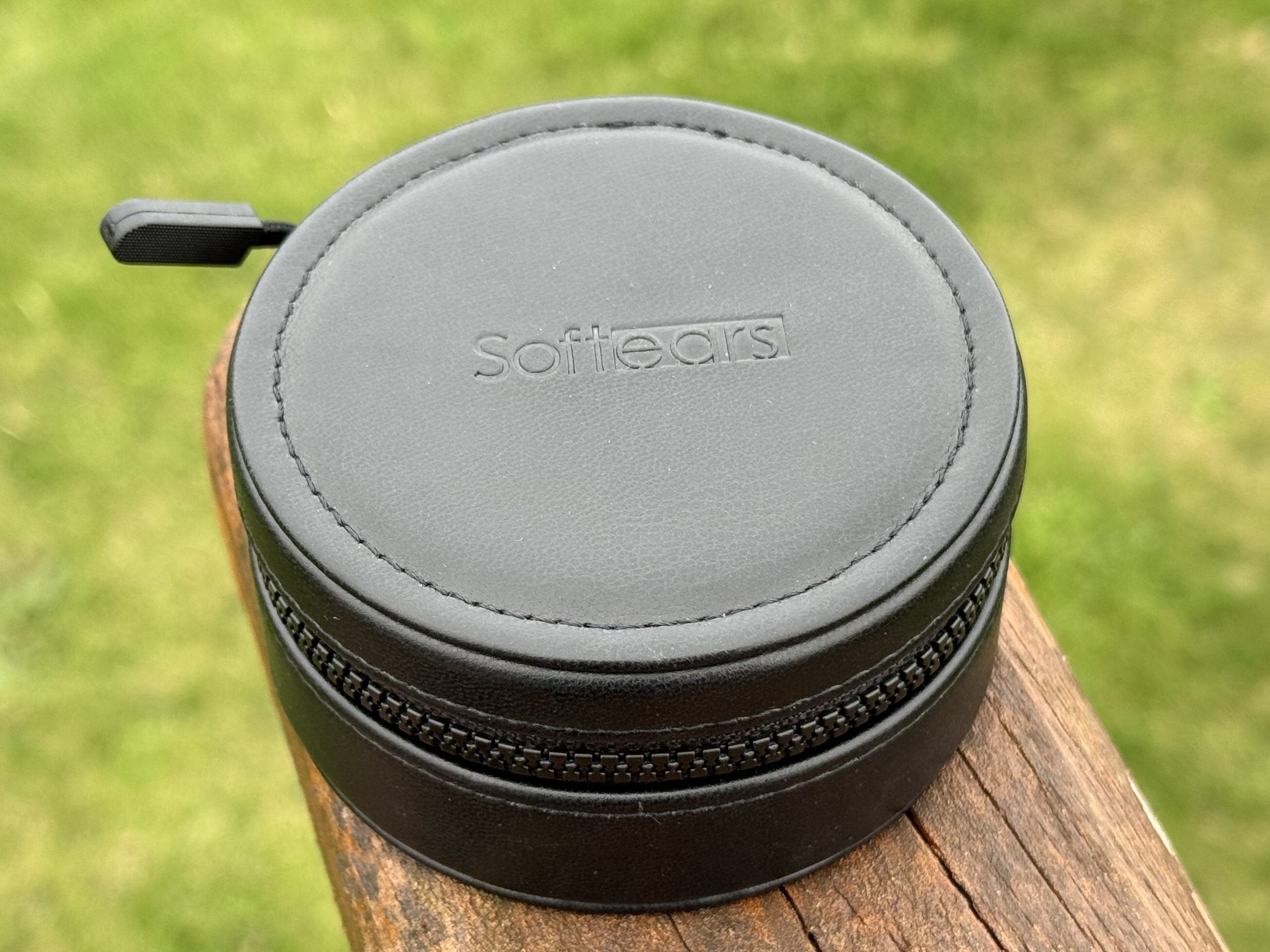
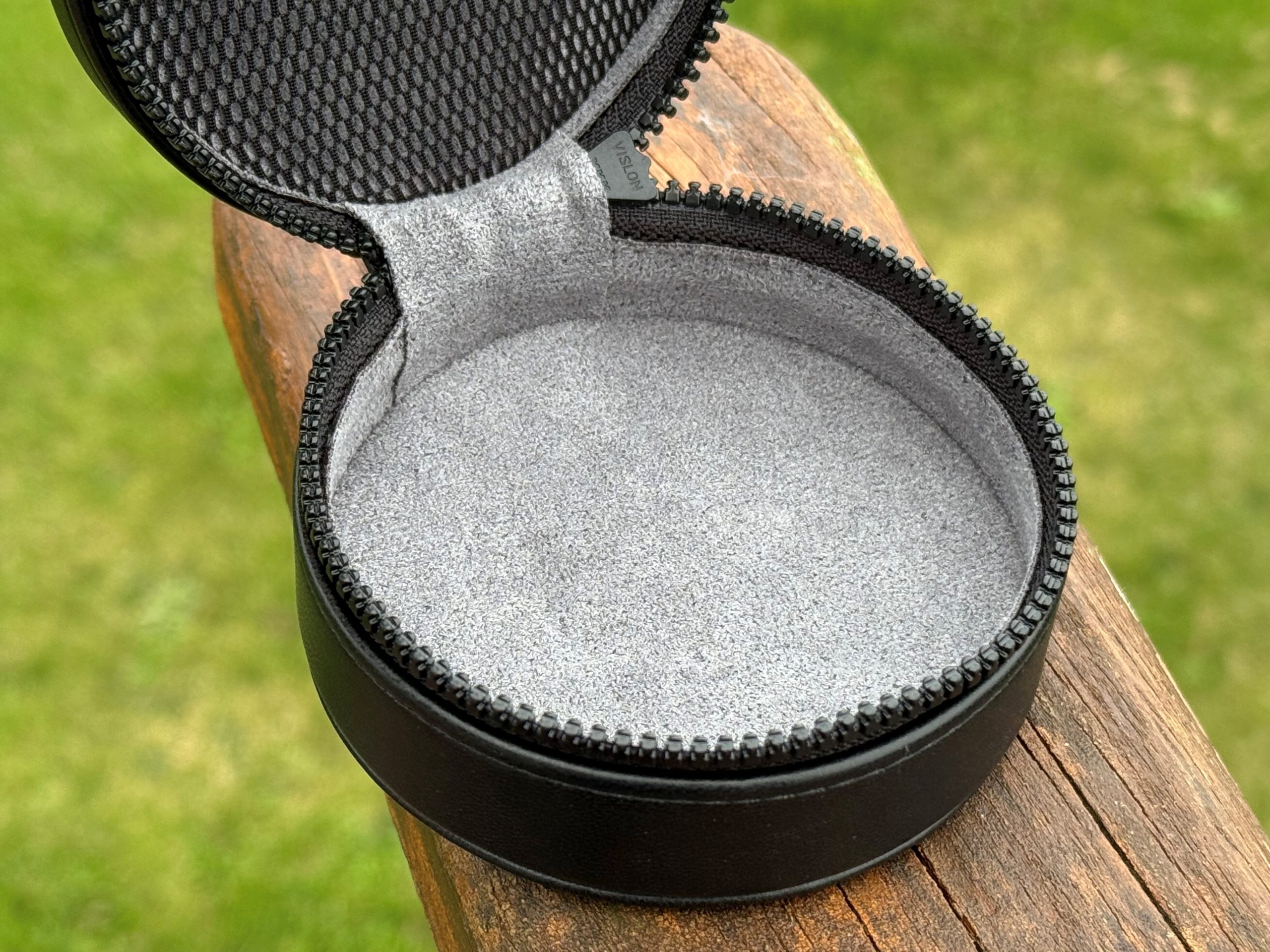
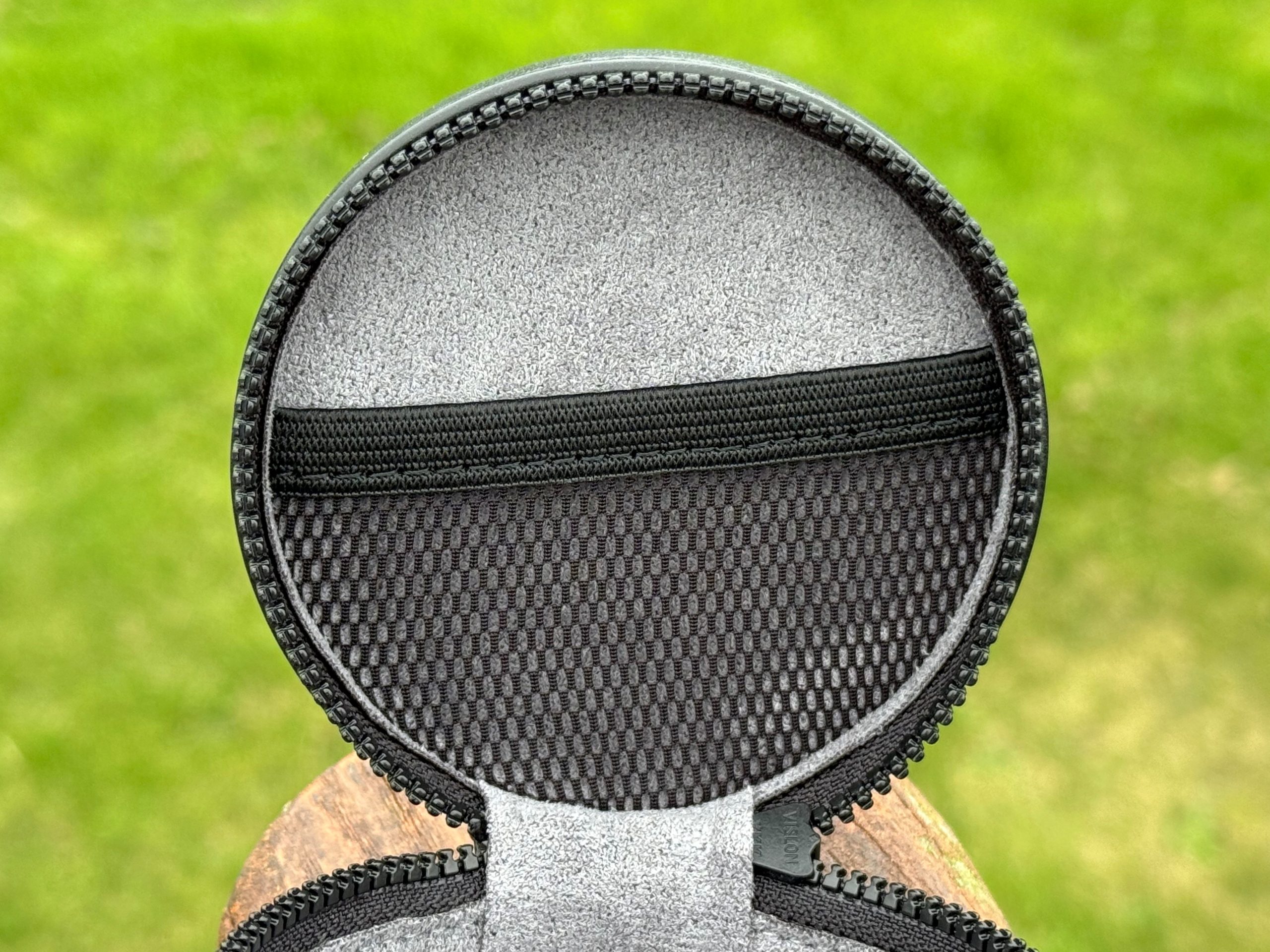
The bundled case has a nice premium faux-leather finish with a sturdy zipper. It (thankfully!) has a net pouch in the lid for storing spare tips, cleaning cloth etc – something that I often note of importance to me!
Cable
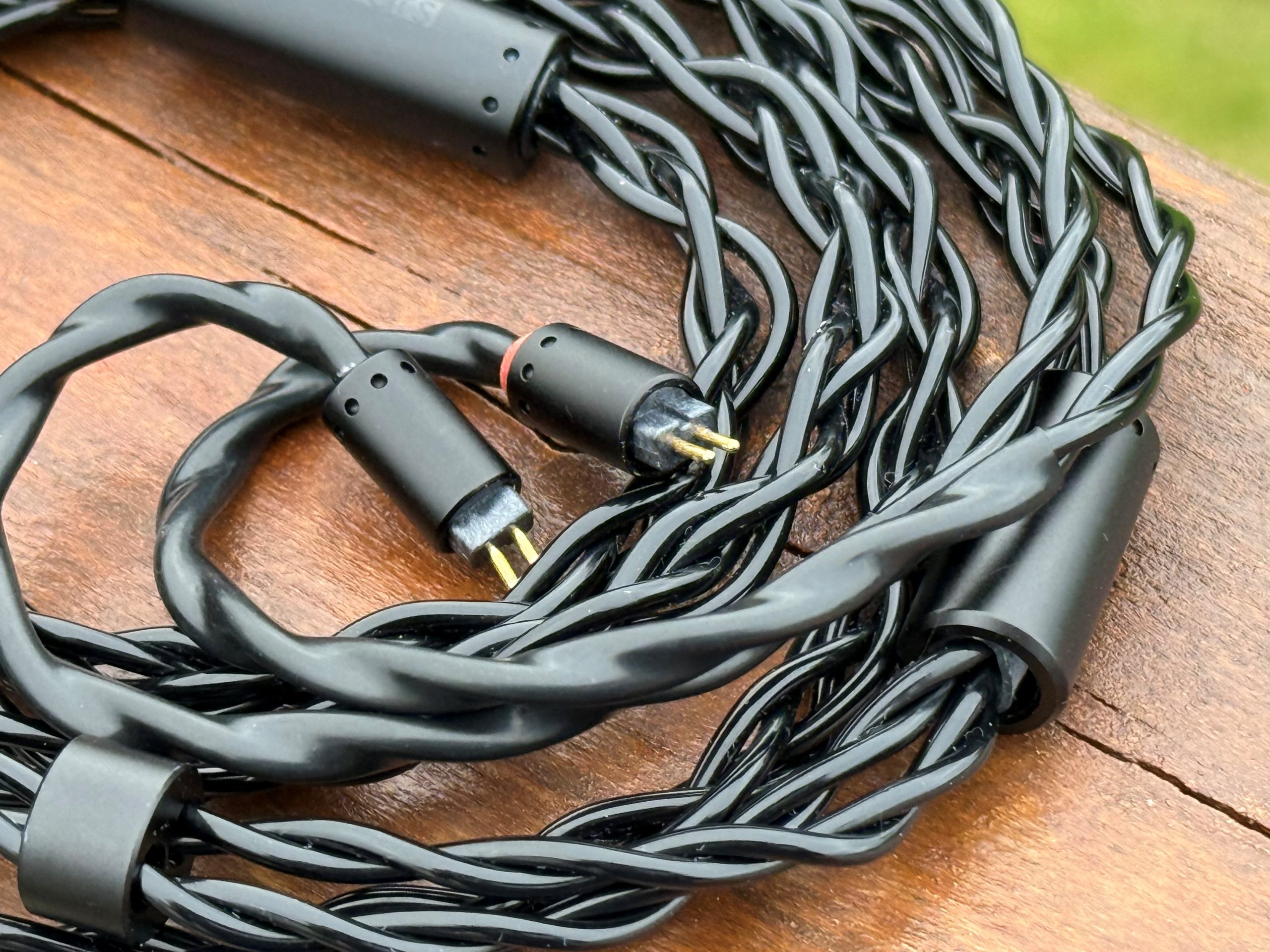
The stock cable has a lovely rubberish texture and again of very high quality – leaning a bit on the heavier side of my personal preferences, especially for out walking but by no means a deal-breaker. Useful perhaps to include the Softears description of the cable below:
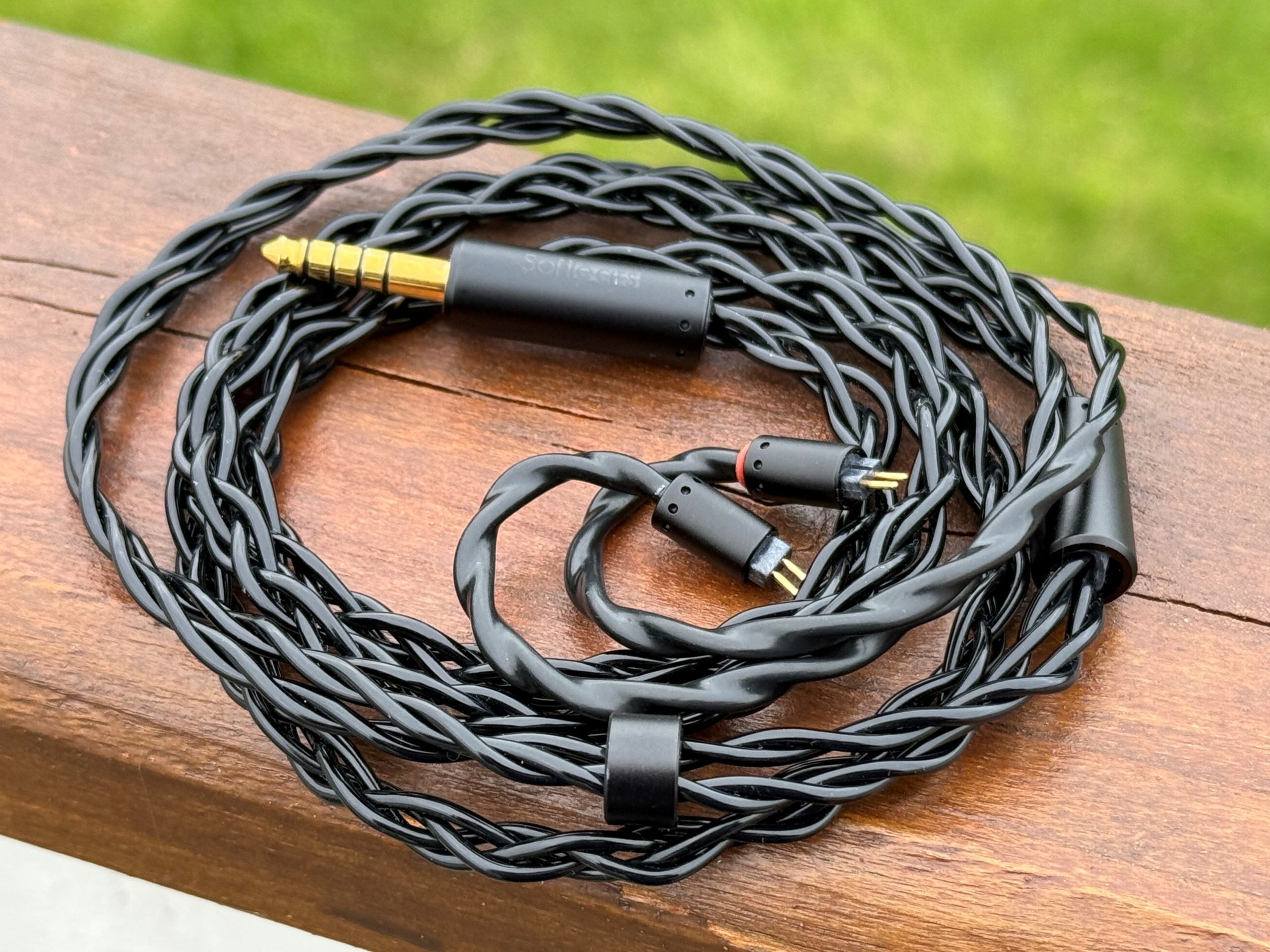
The included pure copper cable is made of 6N high-purity stranded oxygen-free copper, using a 19-strand reverse-twist structure to reduce resistance, minimize signal loss, and ensure uniform current distribution. Multiple cryogenic treatments refine the conductor’s crystal structure, lower the noise floor, and enhance micro-detail reproduction, resulting in clearer highs, fuller mids and lows, and a more expansive soundstage. The universal 0.78mm 2-pin connector supports cable replacement, while the nickel-free gold-plated 4.4mm balanced plug, paired with a 4.4-to-3.5mm adapter, guarantees excellent conductivity, corrosion resistance, and compatibility with mainstream devices.
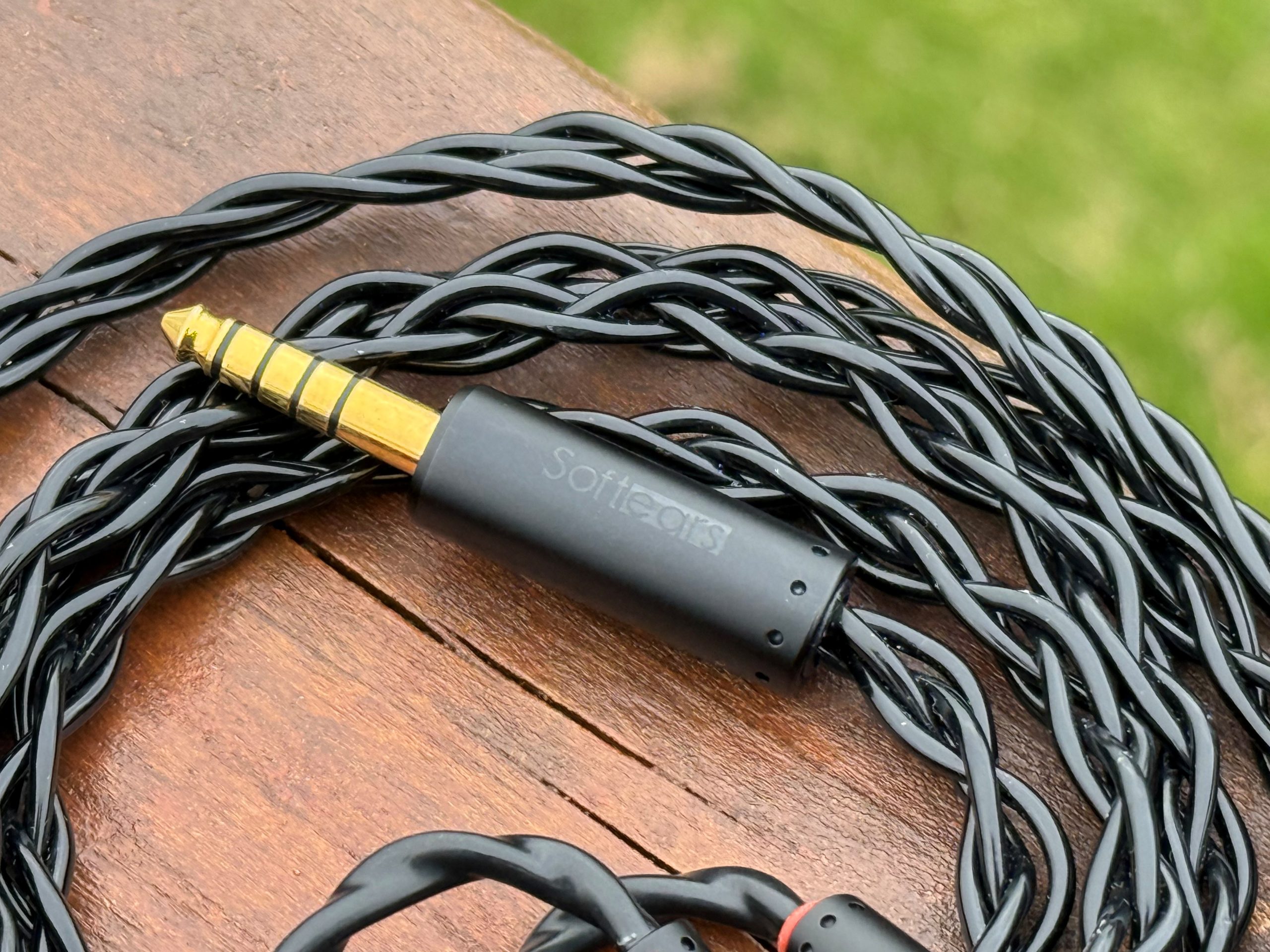
Interesting to see a design choice here where the cable is not modular, instead coming with 4.4mm as standard with the addition of an adaptor for those seeking to use 3.5mm. Probably fair to say the vast majority use 4.4mm now anyway, so this allows for a tidier cable finish.
Design and Fit
Something to touch upon here first is the dreaded pressure build often associated with all BA sets, and an issue that led me to part with the first set of the Sony IER-M9 that I owned originally in around 2021 – I was mostly using silicone tips at the time, and had a selection of favourites that I used with all IEMs. Unfortunately in the case of the M9, this led to serious pressure build which became too uncomfortable to listen for sessions of even up to 30 minutes, that being less than most albums… anyway, I parted company with them but purchased again just early this year having been through other sets with the same issue which I’ve resolved with a variety of tips, and delighted to own the M9 again.
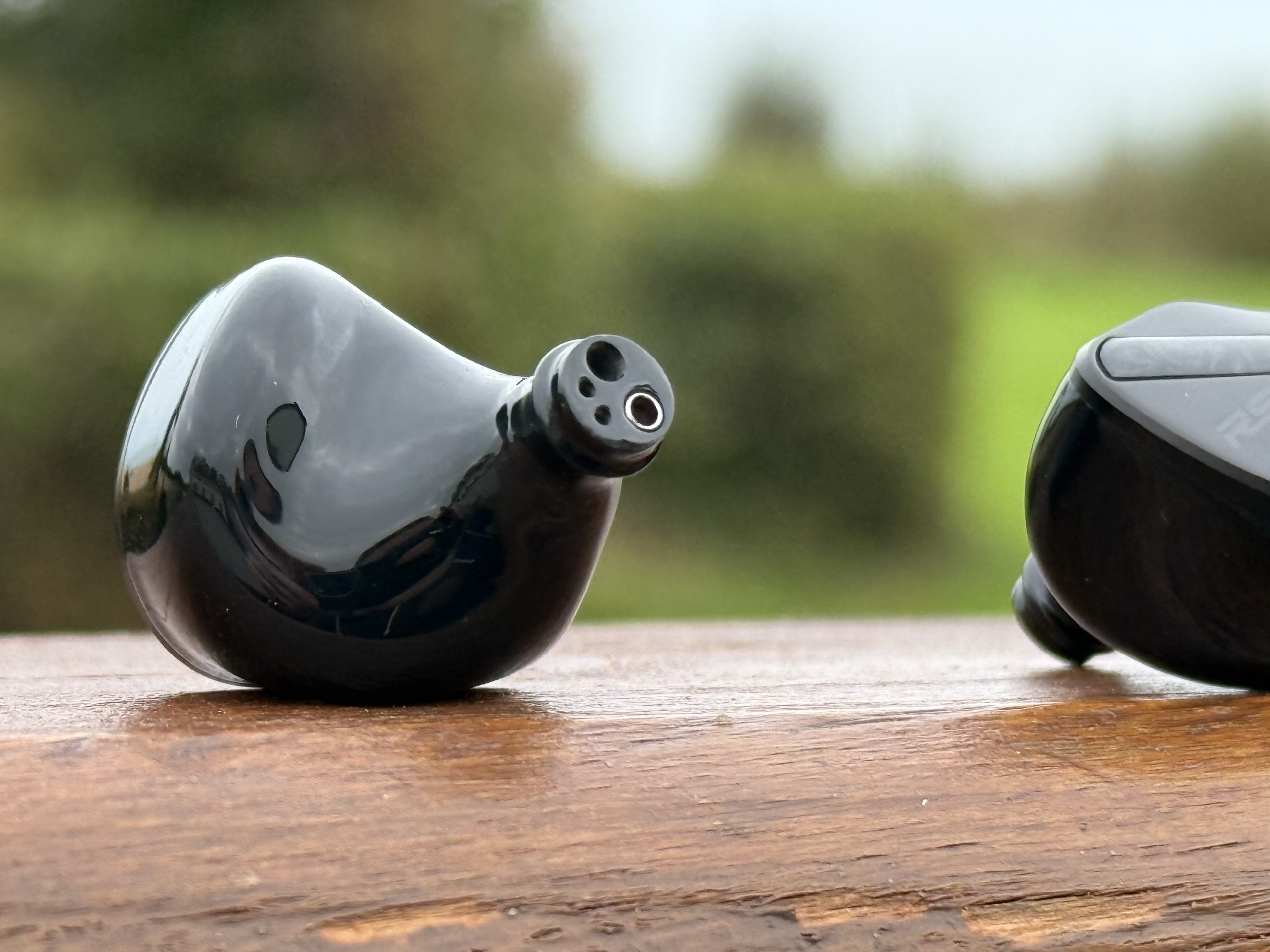
The original RSV had a sealed design which means that pressure build was certainly an issue there – and while it can be solved by way of foam tips and some others on the market, I would still rather this was not a concern – and indeed thankfully Softears has addressed this in the MKII. I’ve had this set for about a month now and listened extensively with mostly silicone tips (the stock ‘Type-B’) and with zero issues. For those interested in how they resolved this, see the description below from Softears:
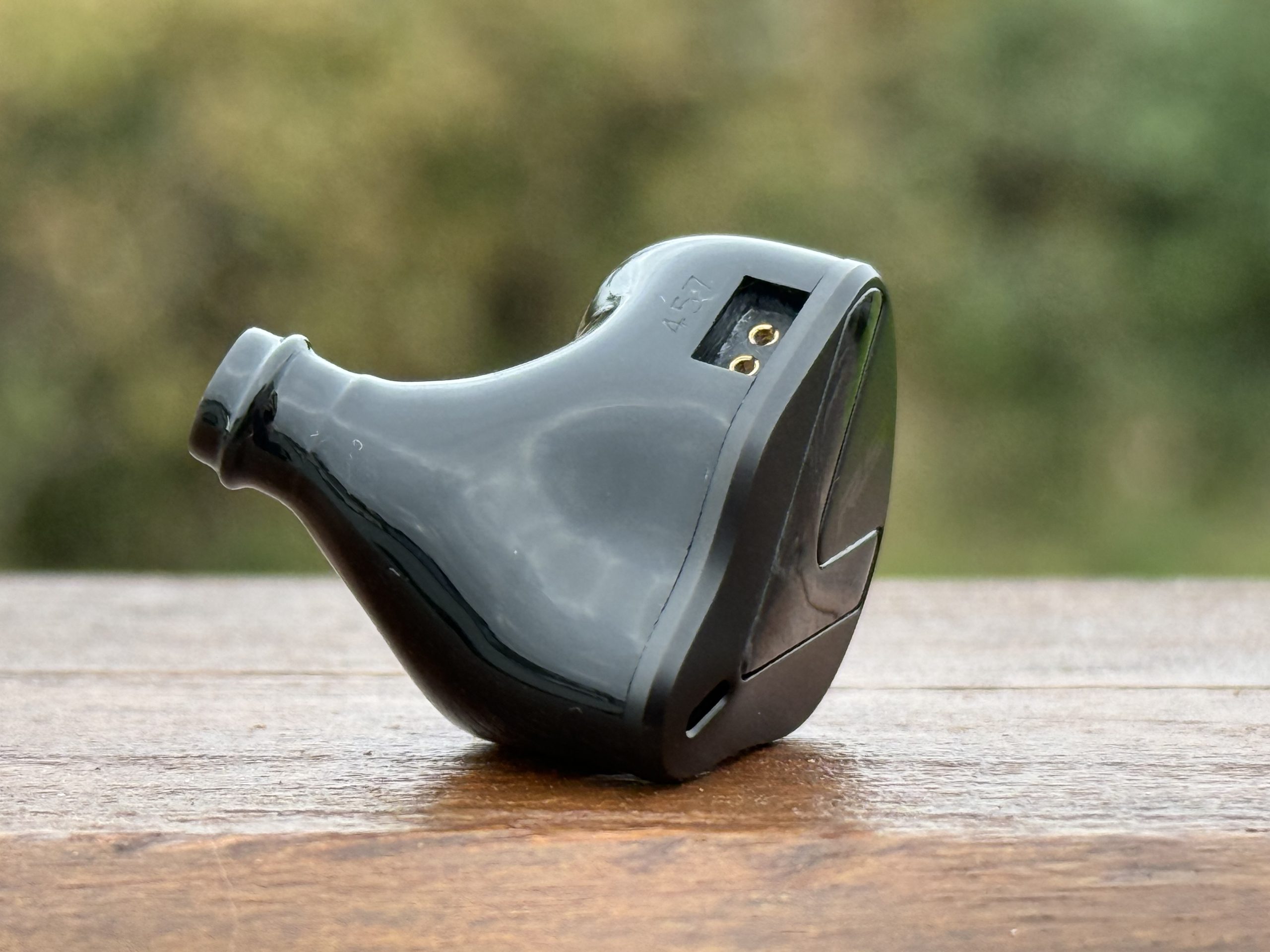
To ensure long-term wearability, the RSV-MKII integrates Softears’ patented passive air-damping system (Patent No: CN202122764459.7) inherited from the flagship RS10, which improves frequency response, enhances bass texture, and relieves pressure during listening. For the first time in Softears’ full-BA models, it also introduces an airflow pressure relief system optimized through acoustic simulation to balance ear canal pressure dynamically, further reducing fatigue. Combined with the precision 3D-printed cavity and anti-slip lip nozzle design, the earphones maintain stable fit, improved sealing, and comfort during long listening sessions.
So yes, no pressure build thankfully!
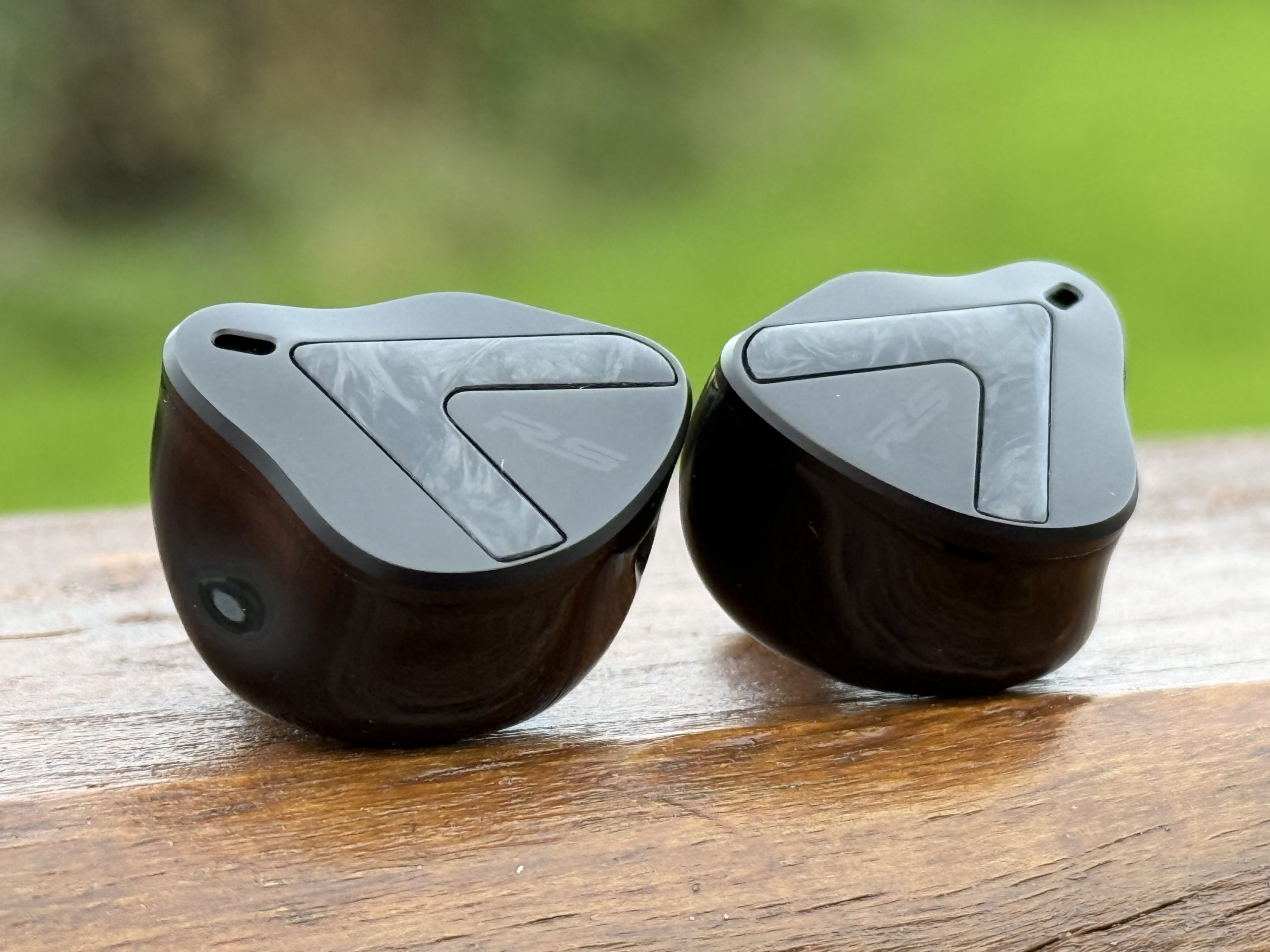
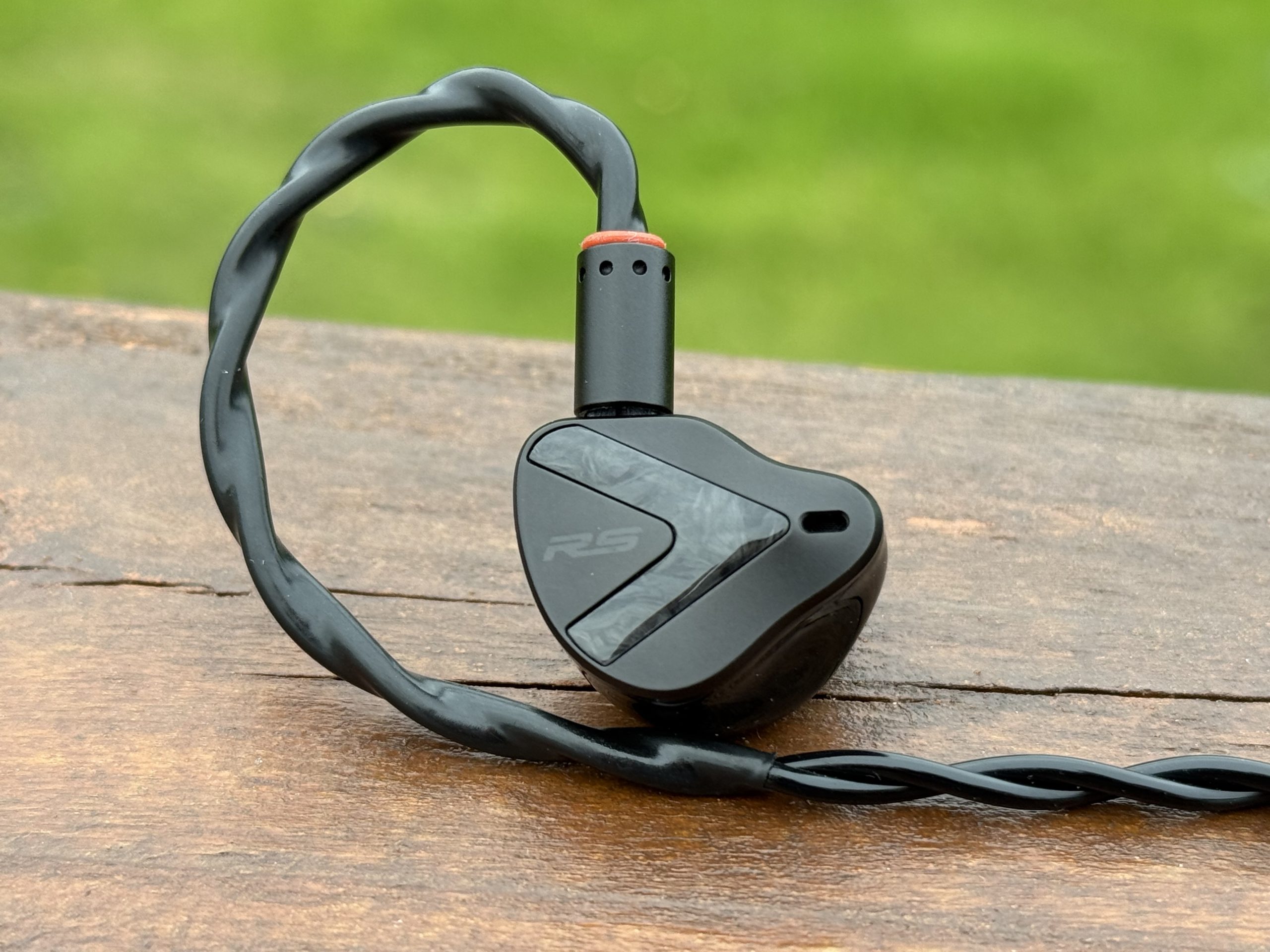
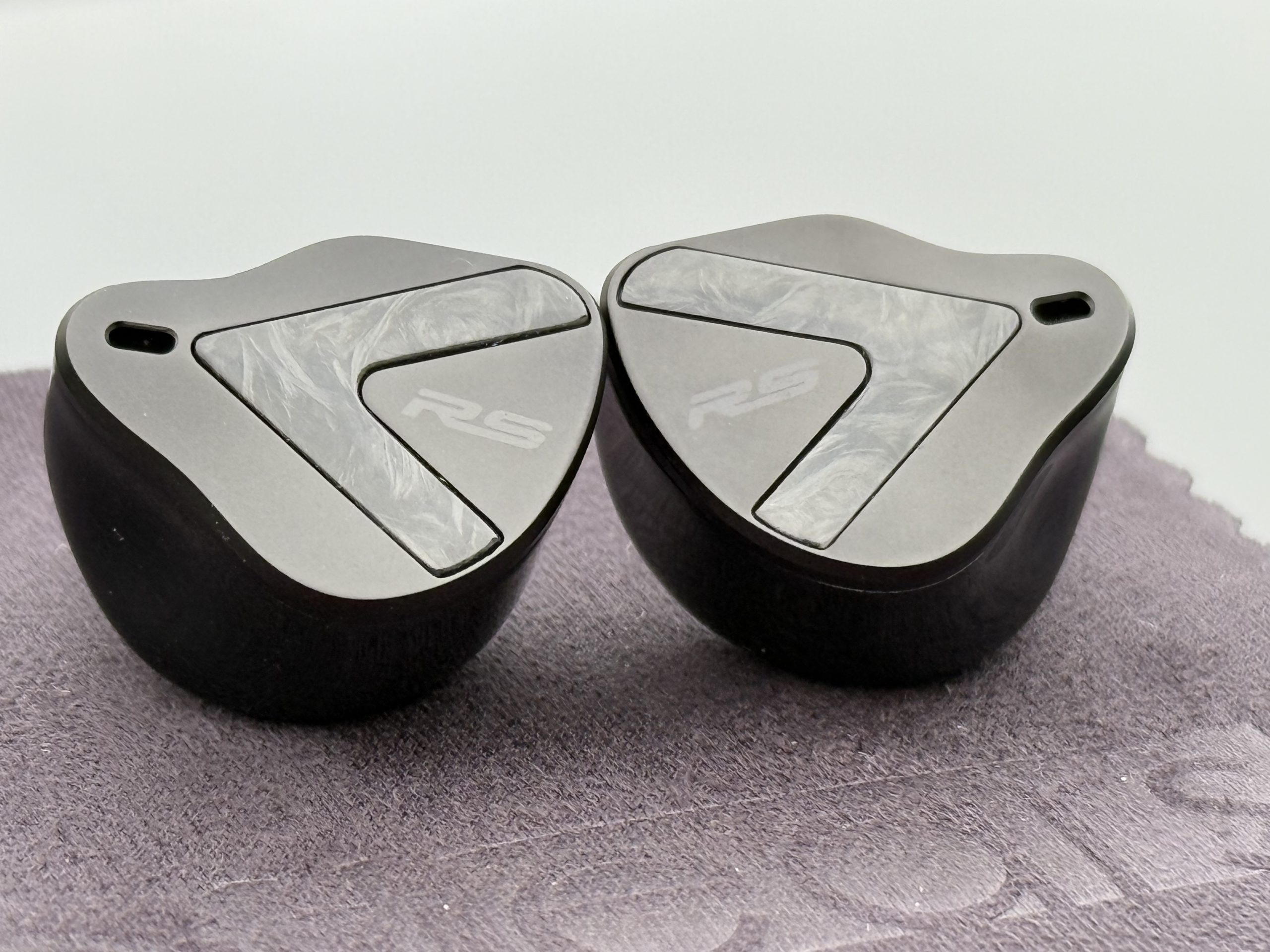
The shells are I would say a medium to large-ish design but certainly not the monstrosity some hybrid sets can be. They sit very comfortably in my ears and I have no trouble with extended listening sessions, of which I have had many – notably a few hours of a recent long-haul from Dublin to Seattle and back… coupled with the ZX707 which made for a wonderful travel combo.
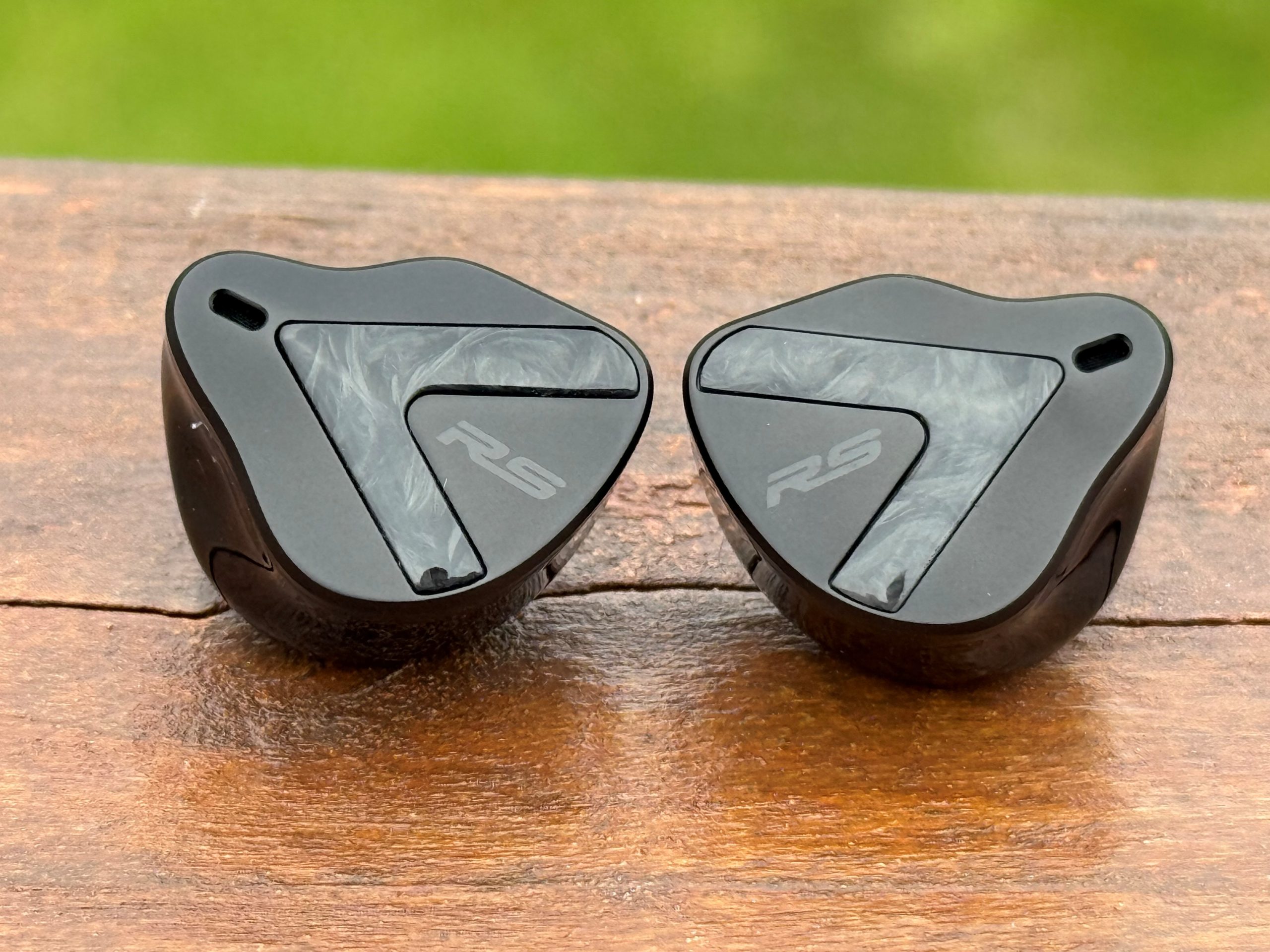
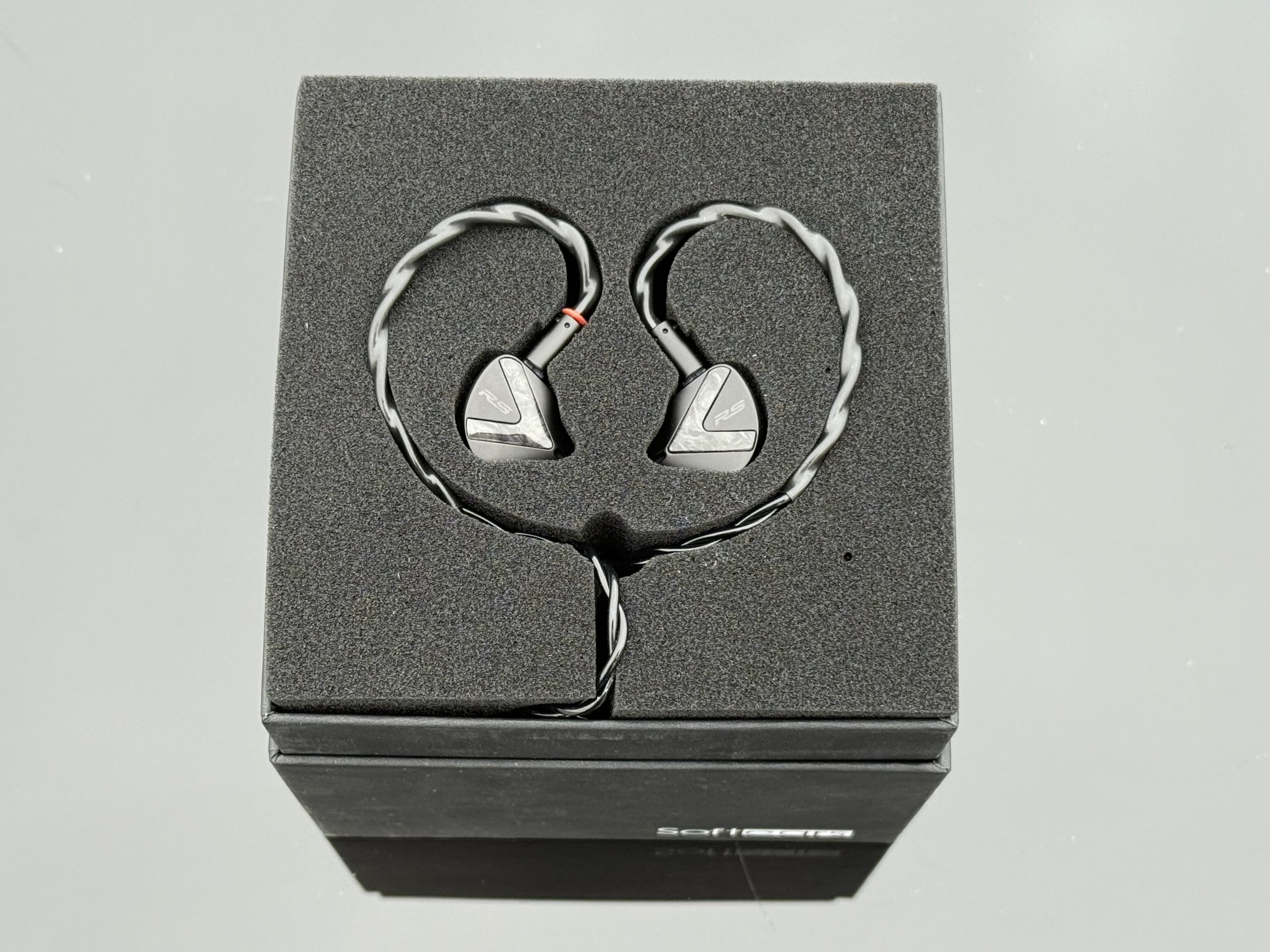
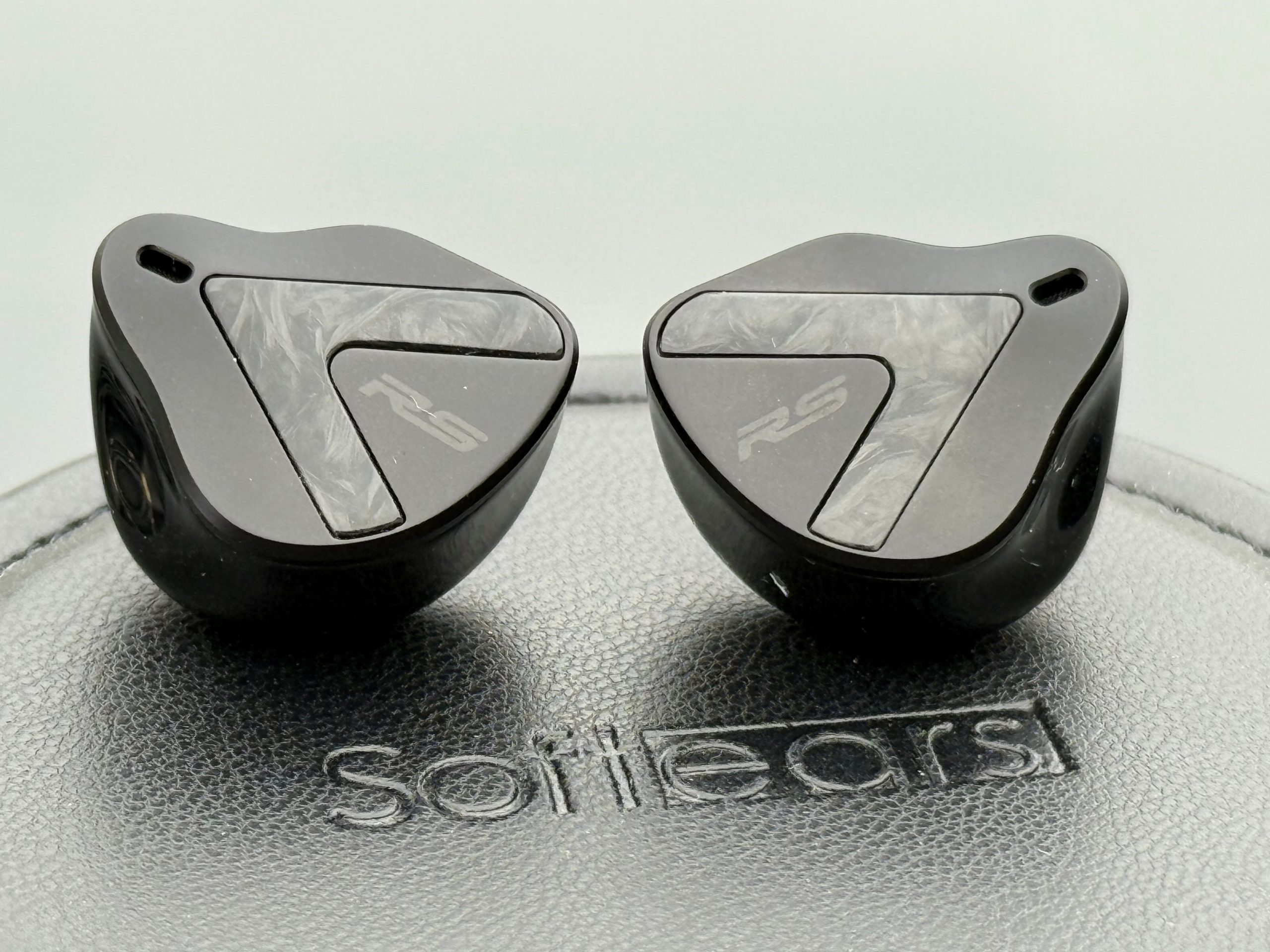
Part of my Softears fanboyism is due to their design choices – I much prefer more understated designs that at the same time are high quality finish, and that is indeed the case with the RSV MKII – the black and carbon fibre finish along with the incredibly tasteful integration of the ‘RS’ and ‘V’ to my eyes just looks fantastic – subtle and again very premium finish, and with robust materials. They simply look and feel great.
Listening Impressions
I mentioned already that I’ve had countless hours with the RSV MKII over the last few weeks, and some of this was due to a work trip where I would reach for them in the hotel every evening after a busy day – the choice of music often inspired by the type of day I had, and certainly a broad selection of genres have been tested… the RSV MKII without question gets a clear ‘all-rounder’ box tick, a set that is very comfortable with anything from intricate ambient to hectic techno, and all in between.
The tuning choice leans towards ‘safe’ whereby as noted they work comfortably with any genre –There is an impressive level of low-end, and an equally impressive execution of bass representation ‘for a BA’ set – as always, you don’t get that same level of visceral slam that a competent dynamic driver can achieve, but the density, speed, and quantity are superb… a nice deep rumble when called for. Also, the all BA configuration leads to a highly cohesive presentation, and I think this is often a reason why I really appreciate all BA sets – the similarity (if I can call it that!) to a single DD in terms of a cohesive presentation. The versatile nature of the tuning also allows for fatigue-free sessions, and definitely leans more into that musical versus technical realm – not that they do not perform on the latter, they are indeed technically competent but not a focus in the tuning per-se. There is a wide and deep stage which allows for excellent imaging and layering, with zero congestion in busier or more complex tracks.
Male vocals have a lifelike presentation, sitting in-line with instruments rather than pushed forward or back. There is good note weight where they sound and feel accurate… listening to ‘Now That You Are Gone’ from Nation of Language as I type to solidify this existing prior conclusion, and very much struck by the sense of space for instrument presentation along with the positioning of the vocals – again I find myself drawn to the overall musical experience which is highly engaging.
Female vocals are again to my ears very well represented, perhaps I could take a little bit more upper mids to extend a touch further but not a deal-breaker. Listening to ‘Ring of Past’ by Men I Trust and again find vocals sitting in-line with instruments – some die-hard vocal fans might prefer a bit more of push forward here rather than level. Yet again, the overall experience in terms of vocals sitting in the mix of an overall cohesive and detailed presentation is delightfully rewarding in terms of simply enjoying the track… no analysis or splitting hairs, just appreciate the song in the emotive and engaging way that RSV MKII delivers.
Going back to the ‘safe’ description from earlier, this is evident not only in upper mids but also in the treble – those looking for extended sparkle will be left a touch wanting, and will have to make do instead with a subtle but captivating shimmer. They do lack ‘bite’ up top, and while they have a degree of airiness, it is not an area I can call out as a prominent feature for those that might seek – the trade off here is the aforementioned all-rounder status that they can enjoy as a result… and of course the fatigue-free tuning for extended sessions. There is a wonderful ‘smoothness’ to the tuning that still allows for admirable levels of detail to the more micro levels, yet my attention is mostly drawn to the cohesion and highly engaging signature.
Reverting to my completely unscientific method of allocating a place on the technical and musical dial, I am going with:
- Technical: 6.5
- Musical: 8
Tracks
Men I Trust – Where I Sit
Choosing this as the album is still playing from checking out female vocals previously… fantastic album and let it keep playing! The bass is really outstanding in this track, both bass guitar and kick drums sound prominent and underpin the overall foundation of the song due to the somewhat dominance of the presence – while I don’t call this a ‘bleed’ in terms of the bass as such, it does make itself known and sort of wraps itself across the overall presentation, allowing for a warm sort of intimacy I guess – not to the detriment of mids where both vocals and instruments are incredibly well represented. Treble is clear but definitely subdued…
Vince Watson – Rise
Throwing some melodic techno into the mix now courtesy of Vince Watson. Again here the bass takes quite a position in the driving seat – both the pounding kick drum and synth bass registers, but likewise not overpowering – I might perhaps like to dial it down slightly, but I tend to prefer bass to be more balanced with overall tuning… I wouldn’t call this a ‘bass-head’ set in the context of other more bass-focused, but it is certainly a tuning attribute of focus. This is quite a melodic and atmospheric track, and the RSV MKII does an excellent job of immersing me into the layers of detail – the stage width and depth creating a captivating club-like experience, especially again with those pounding kick drums.
Alka – Whatever Will Become
Switching to a more complex track from this recent (excellent) album by Alka. The track itself has far less bass focus, which allows the overall presentation to sound more balanced and you can really hear the detail and complexity to shine through, yet still cohesive and highly captivating. The layers of detail really allow the stage size to shine, as I can hear elements drawing my attention out to a vast sounding field.
Mark Pritchard & Thom Yorke – The White Cliffs
I had this album in my wishlist on Bandcamp since I first heard about it. I’m a fan of both artists for their individual output, and naturally intrigued by how they might show up together. I read some negative comments when it first released, which (stupidly) let me to hold off for a couple of weeks before taking the plunge myself – and as always, a great example of hearing for myself rather than being potentially put off by impressions from others… that original instinct of the scope for their partnership on an album was definitely realised! There is a wonderful captivating atmosphere that evolves over the course of this +8 minute track, and the RSV MKII does a phenomenal job of plunging me right into the middle in an incredibly immersive and almost visceral way. The nature of the track mastering has the vocals at times subdued, and others pushed forward, complemented by the stunning musical arrangement that really does make the over 8 minutes conclude far too quickly. Brilliant album, and wonderful with this set.
zakè & Pallette – In The Belly of a Whale
Moving to an ambient/modern classical piece, and an album I’ve chosen a lot recently for chilling in bed before I sleep – a nightly ritual for me is to choose an ambient album to switch my brain off, and I always really enjoy selecting both the album and IEM each night. My single DD bias needs to be mentioned here, as more often than not I will choose one of my many single DDs in this scenario. The immersive and captivating nature of the RSV MKII is immediately evident, that large stage has a sense that I’m plunged right into the middle of the track with the synths feeling like they are stretching out into the universe – a product of the track perhaps more so but very nicely captured here. There are occasional moments where a cavernous bass rolls in, and this again has that highly visceral sensation which I must say is deeply satisfying.
Comparison
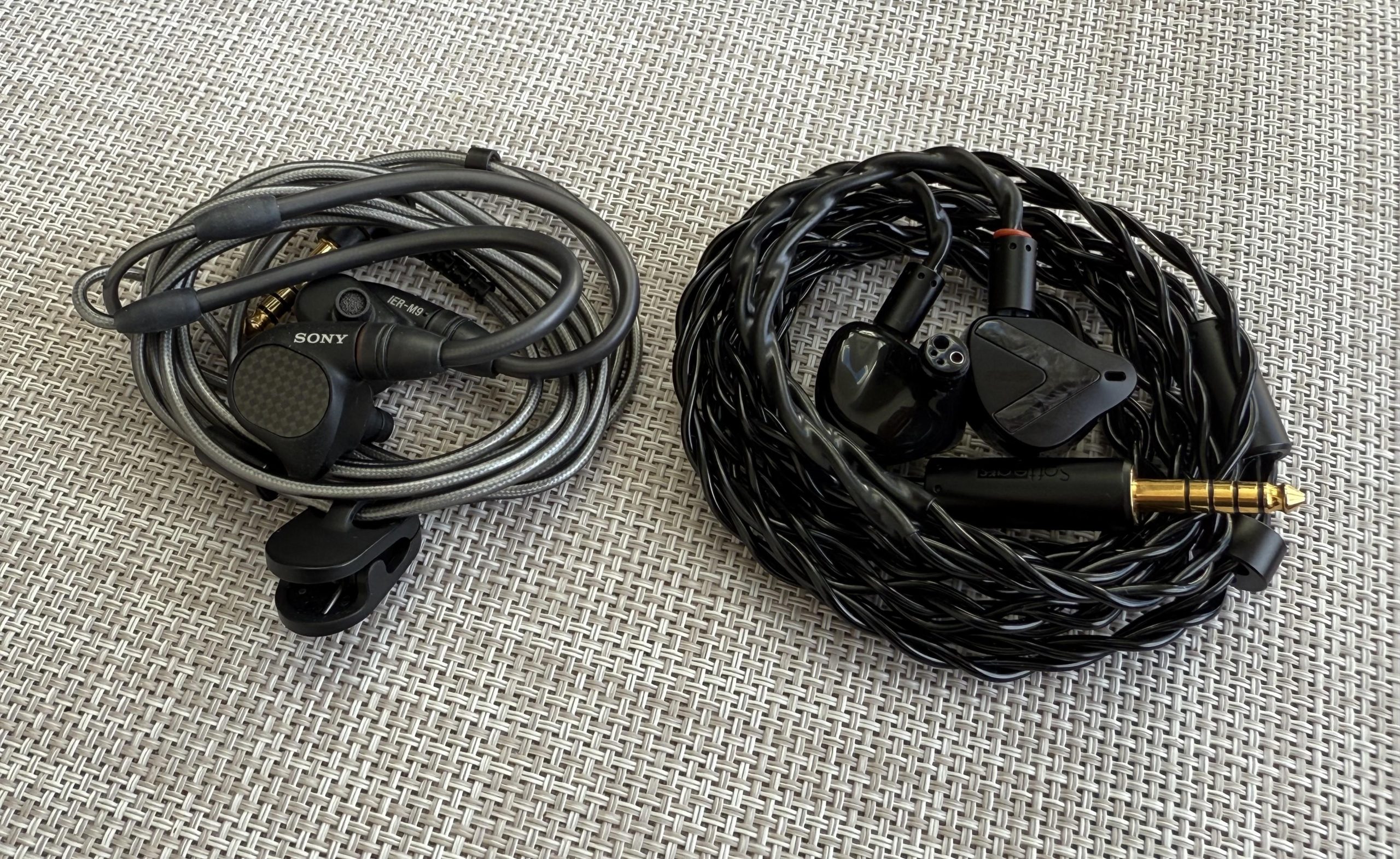
It feels logical to compare the legendary M9 considering the similar driver configuration, albeit with one less BA in the M9. The M9 is now almost 7 years old, first announced in late 2018 which makes it a dinosaur really considering the pace of new releases over the years since. But, given it is still highly regarded, and indeed beyond the driver configuration, also shares a reputation for being ‘safe’ and a solid all-rounder, I feel compelled to compare!
The IER-M9 is over twice the price of the RSV MKII, coming in at $1,499 versus $699 – granted, I know the M9 can be found for less these days, but I think I still paid around $1,200 for a set earlier this year via Amazon in Japan – brand new also, not sure there are many of these left floating in the wild.
While these pictures may not do justice, the M9 are quite a bit smaller than the RSV MKII and I find this noticeable in my ears – with the right tips, the M9 are possibly the most comfortable IEM I’ve ever owned and perfect for the versatility of travel, listening in bed, out walking etc. As noted, the RSV are certainly not huge, but they do lean on the larger side so for those with smaller ear canals, it might be worth taking into account.
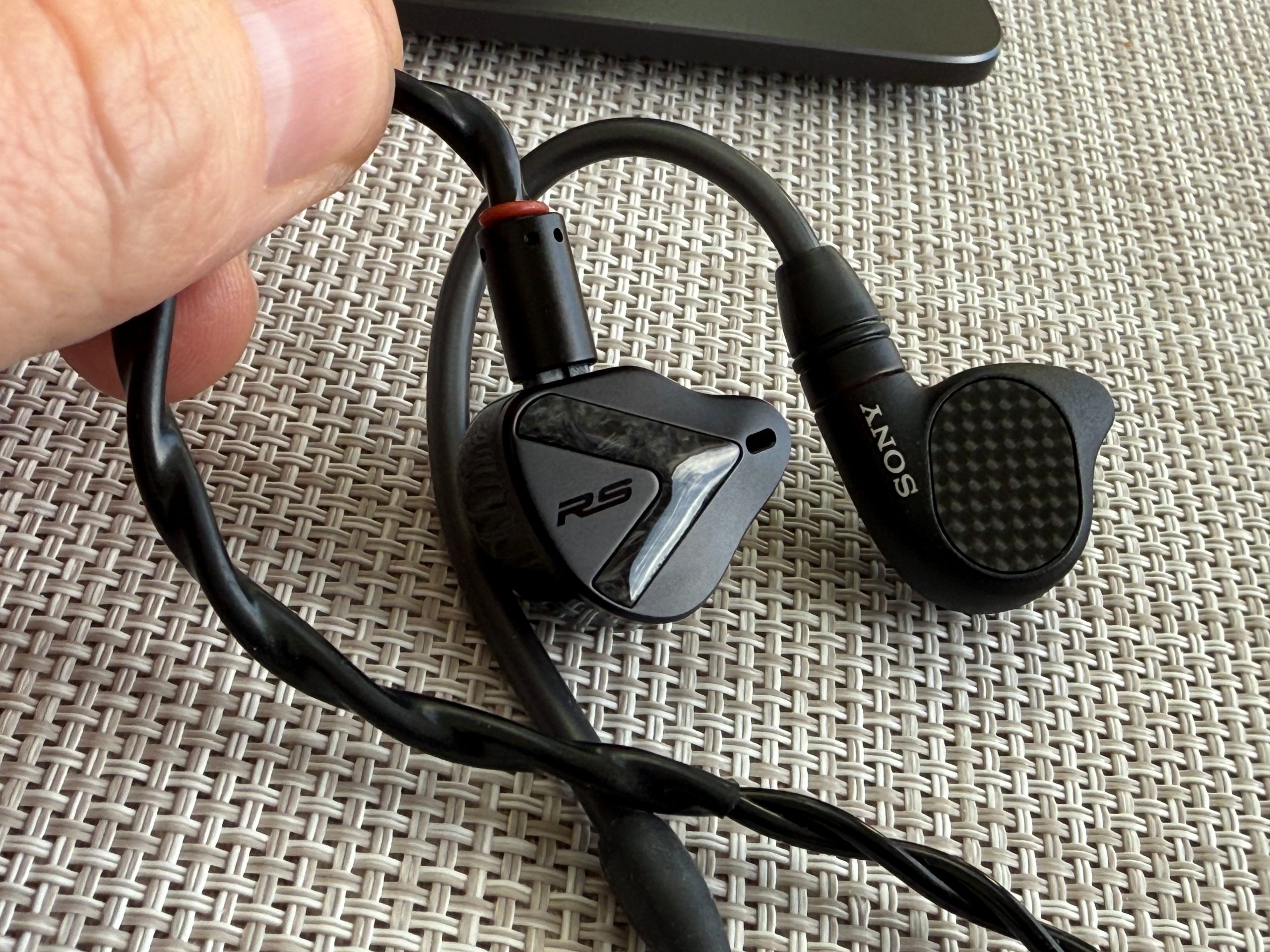
Another attribute I’ve always loved about the M9 is the fantastic stock cable – wonderfully light and ergonomic, which again leads to great versatility in listening scenarios. I’ve read many reports of the cable going sticky over time which is not something I have experienced, this could be a climate consideration – Ireland not known for its warmer weather! The RSV MKII cable in comparison is quite a bit thicker and heavier – still a gorgeous cable in my opinion, but I prefer lightweight as per the Sony.
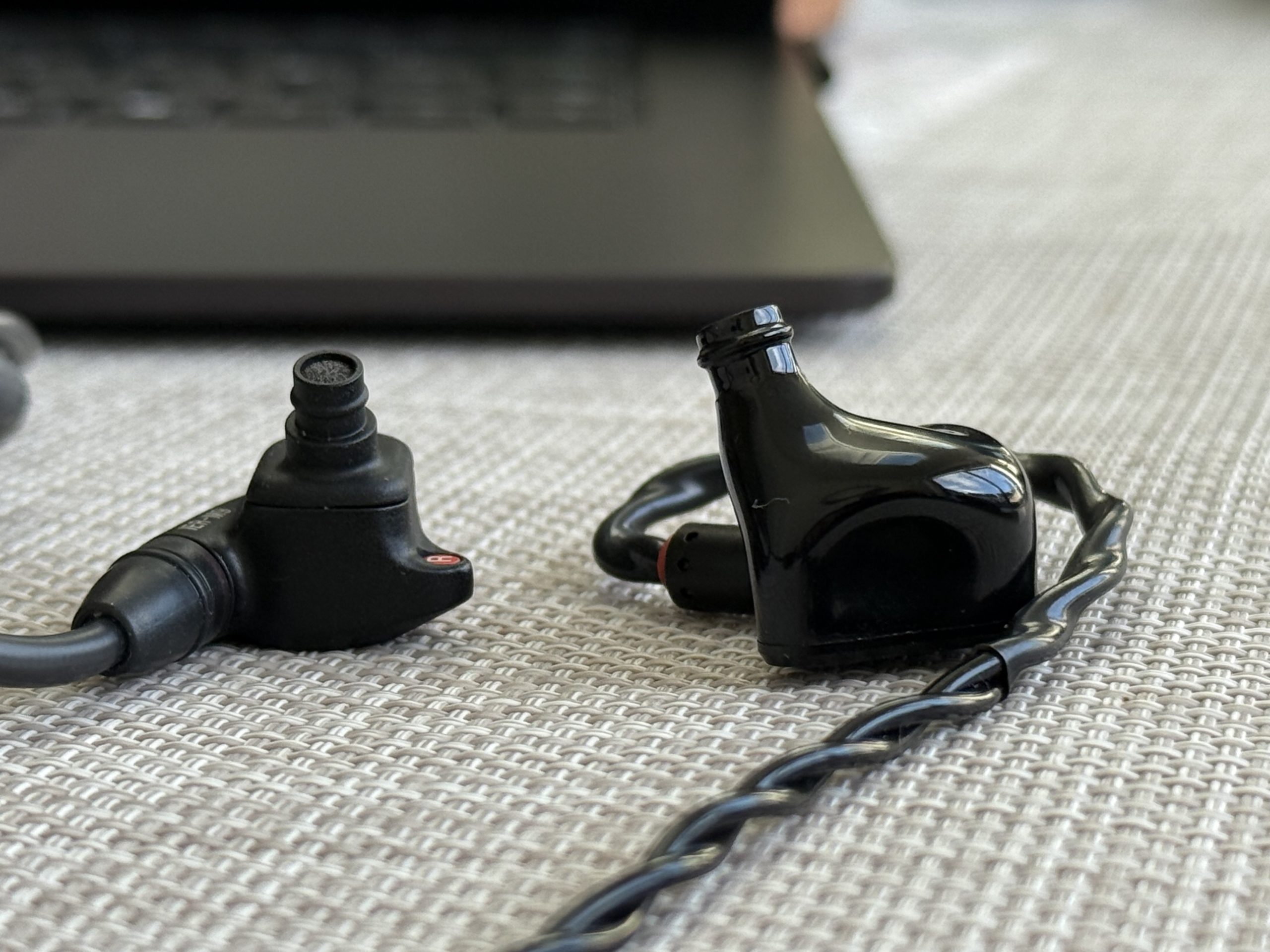
From a listening perspective, these two share that combination of ‘safe’ and ‘emotive’. When listening to ‘Ex-Machine’ by Kuroi Ame, the most obvious immediate difference however is absolutely the bass where the RSV MKII cranks out a huge amount more, a lot more than I would have guessed prior to jumping between the two. While not a treble-focused set, the IER-M9 definitely has more energy up top and overall sounds more balanced in totality. There is a distinctive elegance I find with the M9 that has always sucked me, and indeed to note I have always leaned towards more balanced sets. The RSV MKII in contrast sounds more fun, especially with that low-end emphasis but also a larger stage presentation. The M9 sounds more intimate, delicate, organic, and again more balanced. Interestingly, the more I switch between the two, the more I would conclude that the M9 is actually the ‘safer’ of two already safe sets!
Conclusion
The RSV MKII has led to further compound my massive appreciation for Softears, even if it deviates from my typical tuning preference for more balanced sets – the bass emphasis here just nudging it a bit outside my happy place, and indeed I could take a little bit more sparkle and air up top… but broadly speaking, the RSV MKII makes for an incredibly compelling all BA set that works wonderfully no matter what genre you choose to load up, leading to a highly engaging and cohesive listening experience – the attention to detail in terms of everything from the bundled accessories to the beautifully designed shells and cable, equate to yet another wonderful addition to the Softears line up. Now I wait with bated breath for news of a new flagship DD… c’mon Softears